How to Photograph the Northern Lights in Finnish Lapland
Last updated:
Photographing the aurora in Lapland is easier than many people think. With a tripod, a camera that allows manual settings – or even just a modern smartphone – you can bring home impressive images. The key is to prepare before you step outside into the cold.
Essential gear
- Camera with manual exposure control (DSLR or mirrorless)
- Wide-angle lens (ideally f/2.8 or faster)
- Sturdy tripod
- Spare batteries (cold drains them quickly)
- Remote shutter or self-timer
- Headlamp with red light mode
Basic camera settings for auroras
There is no single perfect setting for all situations, but the following starting points work well in Finnish Lapland:
- Mode: Manual (M)
- Aperture: f/1.4–f/2.8 if available, otherwise widest your lens allows
- ISO: 1600–3200 to start with
- Shutter speed: 2–8 seconds for typical moving auroras
- Focus: Manual, pre-focused at infinity on a distant light or star
- White balance: Auto or around 3500–4000K as a starting point
If the aurora is very bright and moving quickly, use shorter shutter speeds (1–3 seconds) to capture more detail in the structures. If the aurora is faint and slow, you can extend to 10–15 seconds, but stars will start to trail slightly.
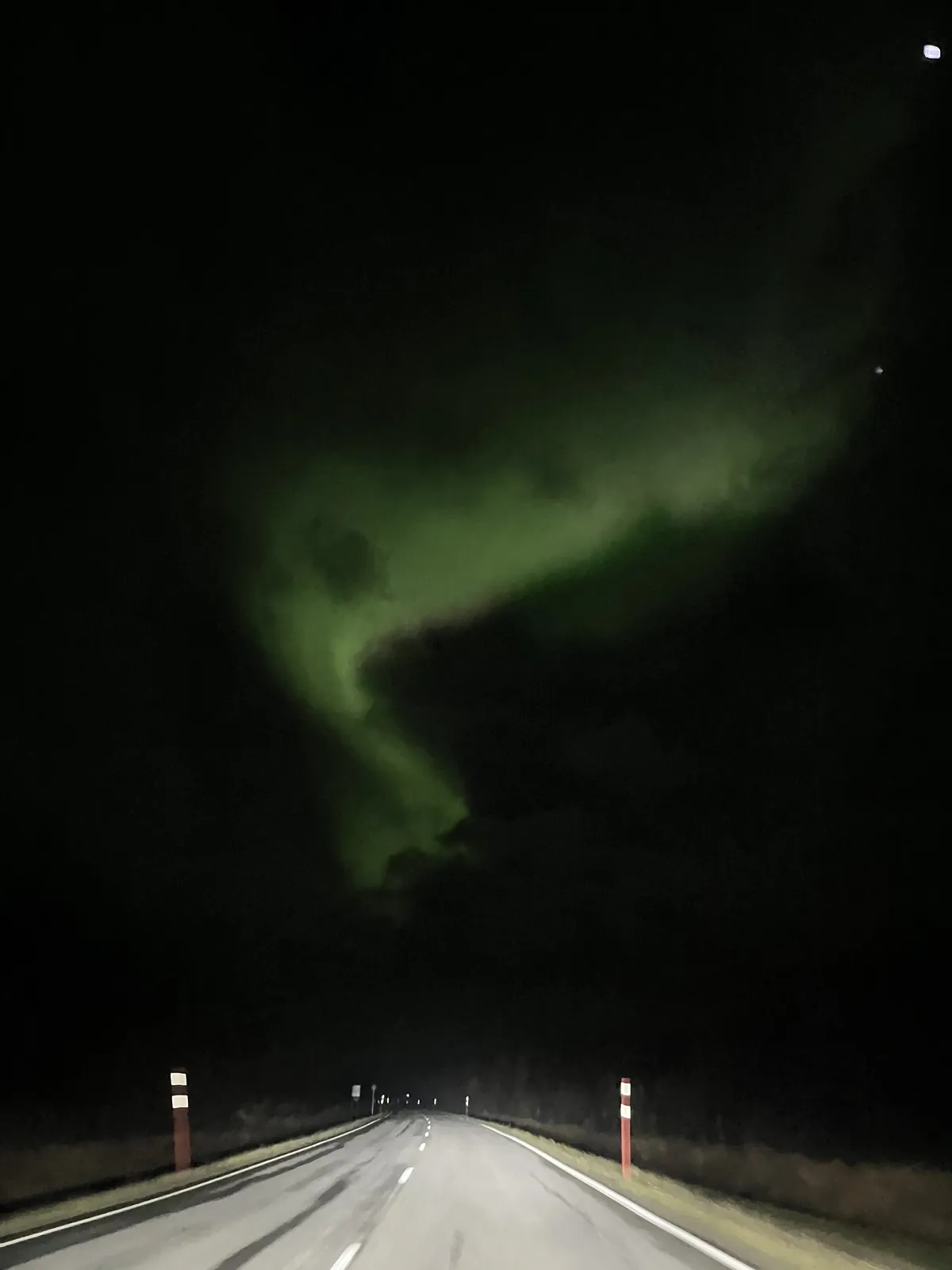
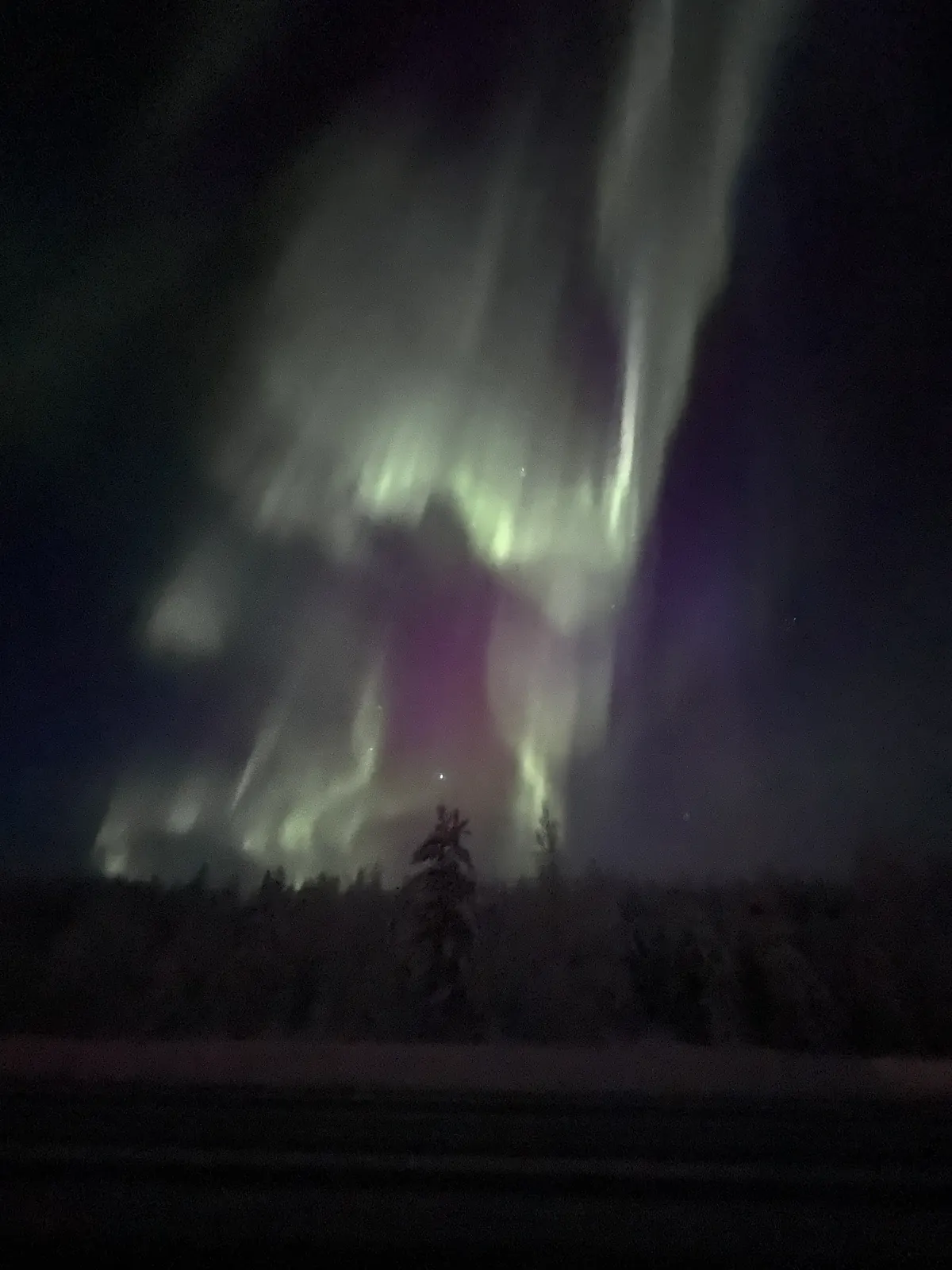
Smartphone photography tips
Modern smartphones can capture Northern Lights surprisingly well in Lapland's dark skies, especially if you:
- Use a tripod or rest the phone against a stable surface
- Activate night mode or long-exposure mode if available
- Tap to focus on a distant light or the horizon
- Disable flash and avoid digital zoom
Some phones allow manual control through "Pro" modes. In that case, use similar settings to a camera: high ISO, wide aperture and a few seconds of exposure.
Compositions that work well in Lapland
The Northern Lights are impressive, but your photos become much stronger if you anchor them with a foreground:
- Snow-covered trees or fells (hills)
- Cabins with warm light in the window
- Frozen lakes and reflections when the surface is smooth
- Silhouettes of people looking up at the sky
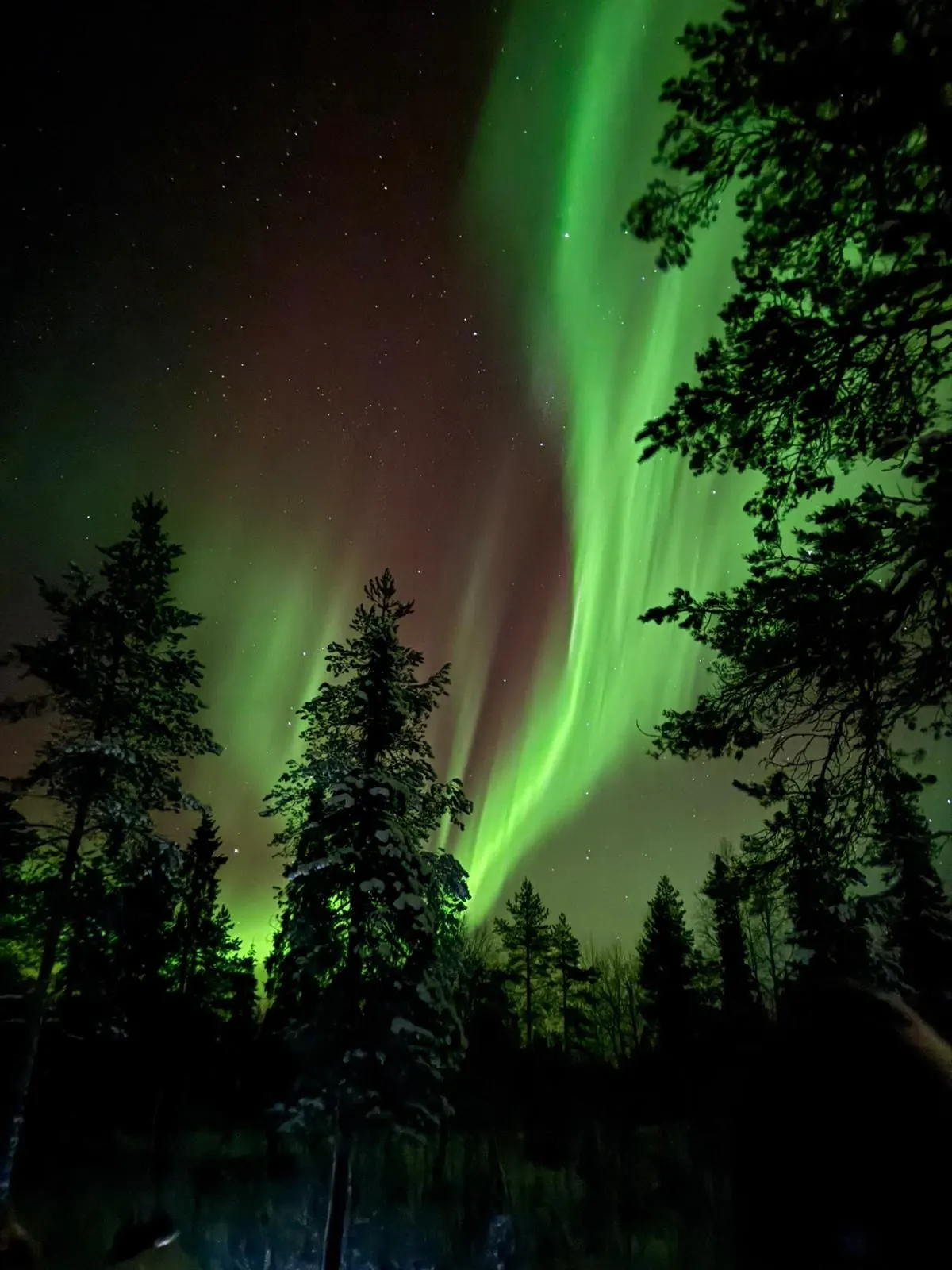
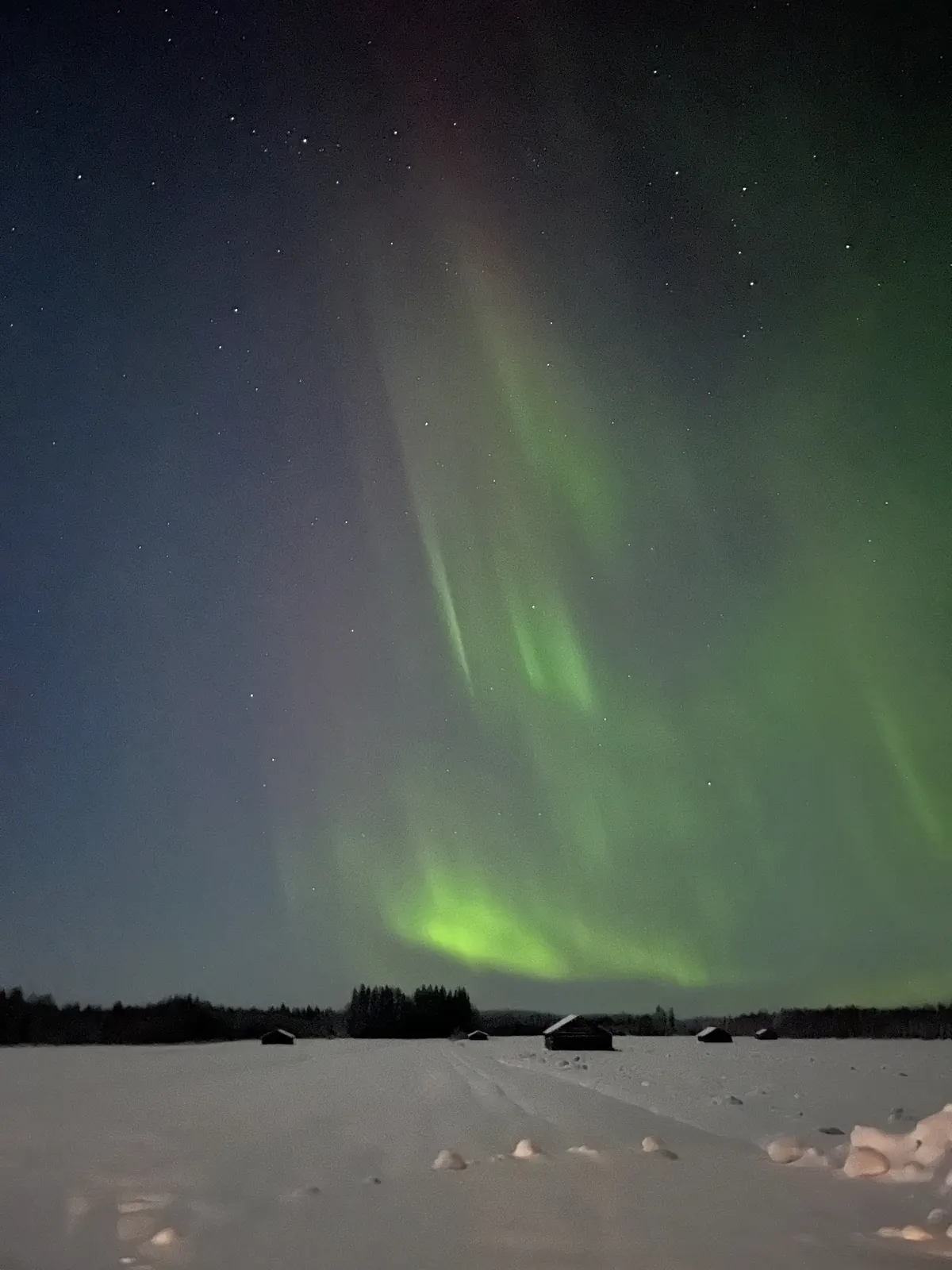
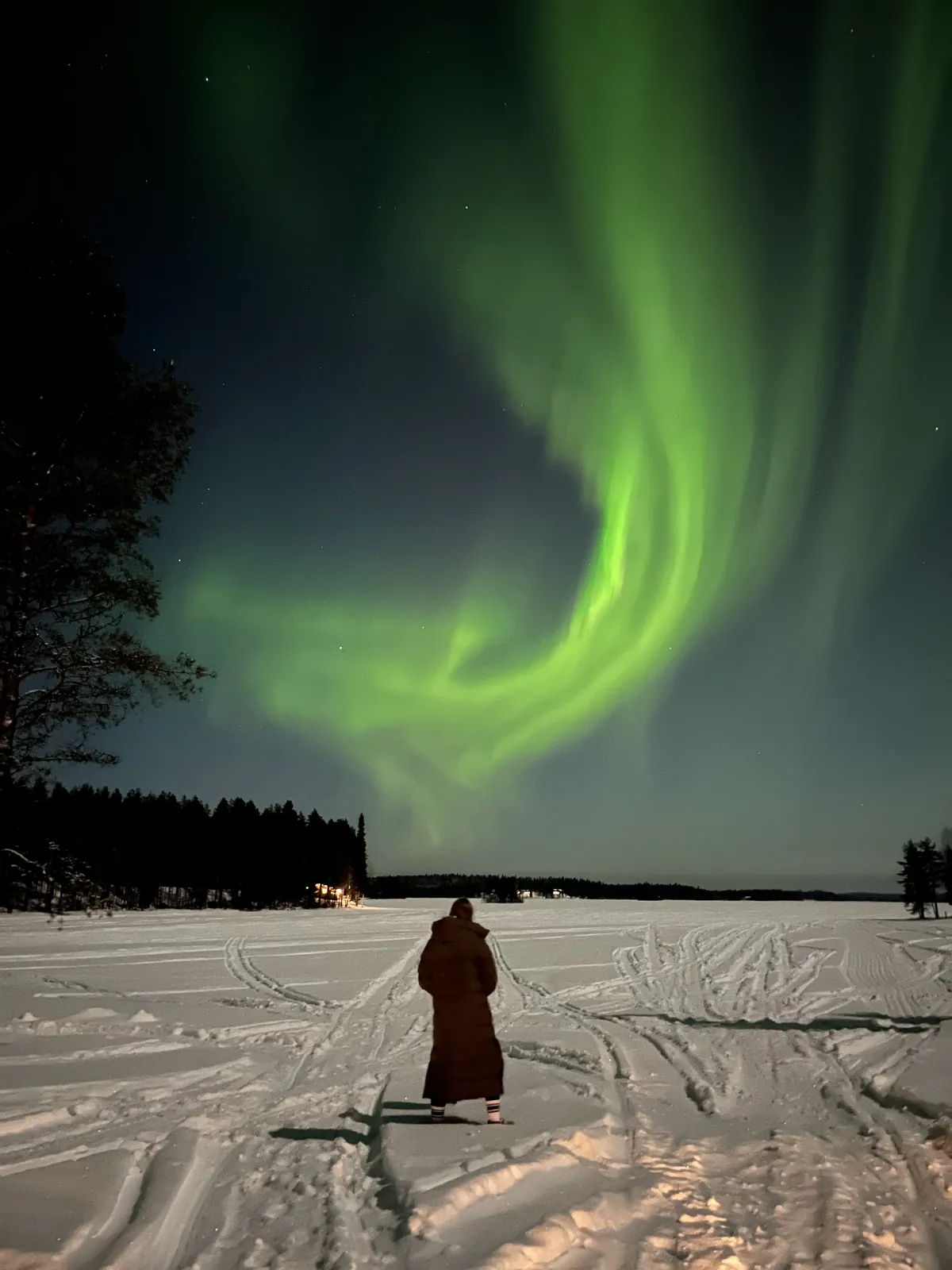
Arrive at your location before full darkness if possible, so you can safely inspect the terrain and plan your composition while you can still see the surroundings.
Staying warm while shooting
Standing still with a camera is often much colder than walking. Combine the tips from our Arctic safety guide with:
- Warm boots with thick wool socks
- Several layers on upper body, including a down or synthetic insulation layer
- Thin liner gloves for operating the camera, with thicker mittens on top between shots
- Hand warmers in your pockets to keep fingers and batteries warm
Northern Lights Photography: FAQ
What camera settings should I use for the northern lights?
Start in manual mode with the widest aperture, usually f/1.4–f/2.8, ISO 1600–3200 and a shutter speed of 2–8 seconds. Focus manually at infinity on a distant light or star, and use a sturdy tripod. Shorten the exposure to 1–3 seconds for fast, bright aurora, and extend to 10–15 seconds for faint, slow aurora.
Can I photograph the northern lights with a smartphone?
Yes. Modern phones handle Lapland's dark skies well if you use night mode on a tripod or a stable surface, tap to focus on a distant light or the horizon, switch off the flash and avoid digital zoom. In a Pro mode, use camera-like settings: wide aperture, high ISO and a few seconds of exposure.
Which lens is best for northern lights photography?
A wide-angle lens with a fast aperture, ideally f/2.8 or faster. It captures more of the sky, gathers enough light to keep exposures short, and lets you include foreground such as trees, a cabin or a frozen lake.
How do I stop my camera and battery from failing in the cold?
Keep spare batteries in an inner pocket and rotate them as they cool. To prevent condensation, put the camera and lenses in a closed plastic bag before going indoors and let them warm up slowly. Do not breathe on the lens, and avoid wiping a fogged lens. Hand warmers in your pockets help both batteries and fingers.
What makes a northern lights photo more striking?
A strong foreground. Anchor the sky with snow-covered trees, fells, a cabin with a warm window, a smooth frozen lake or a person looking up. Arrive before full darkness so you can scout the spot and plan the composition while you can still see the terrain.
More answers: Northern lights in Finland FAQ →
Free, no booking, no sales
Ask a local in Finnish Lapland
Planning a northern lights trip? Send your question to someone who actually lives here. Dates, places, clothing, driving, photos or whether your plan makes sense: you get an honest answer for free.